



.svg)
Lattice Scaffold
Guide cell alignment and securely position microtissues in a single, precision-manufactured scaffold.
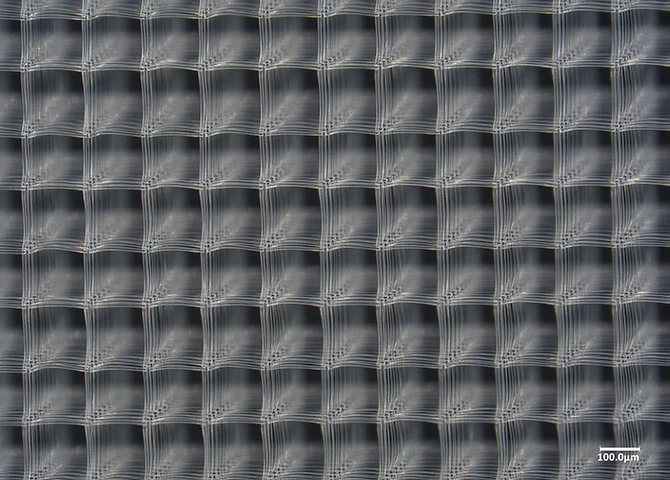
The box design features a rectangular microfiber architecture with 100–300 µm spacing, creating distinct microtissue compartments. It is highly versatile and used in applications such as cardiac tissue patches in vivo, cartilage modeling in vitro, and spheroid biomanufacturing.
Guide cell alignment and securely position microtissues in a single, precision-manufactured scaffold.
The box design features a rectangular microfiber architecture with 100–300 µm spacing, creating distinct microtissue compartments. It is highly versatile and used in applications such as cardiac tissue patches in vivo, cartilage modeling in vitro, and spheroid biomanufacturing.
KEY BENEFITS
Micron-Level Architectural Precision via Melt Electrowriting
Manufactured using melt electrowriting (MEW), the scaffolds deliver precise fiber diameter, fiber spacing, and alignment, with extreme precision for highly reproducible experiments.
Why it matters: Manufacturing consistency directly impacts experimental reproducibility, limiting comparability across studies and impact of results.
Provides a Backbone for Hydrogels
VivoTex MEW Scaffolds provide mechanical reinforcements to soft hydrogels that enable handling and manuverability
Why it matters: Cells prefer to grow in soft hydrogels. Handling, moving, and processing soft hydrogel constructs is challenging, and often introduces artifacts. MEW scaffolds provide a simple and powerful solution to workflows with soft hydrogel cultures.
Structural Cues for Cellular Patterning
Microfibers provide contact guidance cues that affect cell-cell interaction, cell elongation, migration, and organization along a defined axis, critical for modeling biological tissues
Why it matters: All biological tissue comprise fibrous microstructures that provide structural cues for cells and enable functional mechanical properties. Most hydrogel matrices fail to replicate the structural cues present in native ECM, limiting biological relevance.
Designed for Standard Lab Workflows
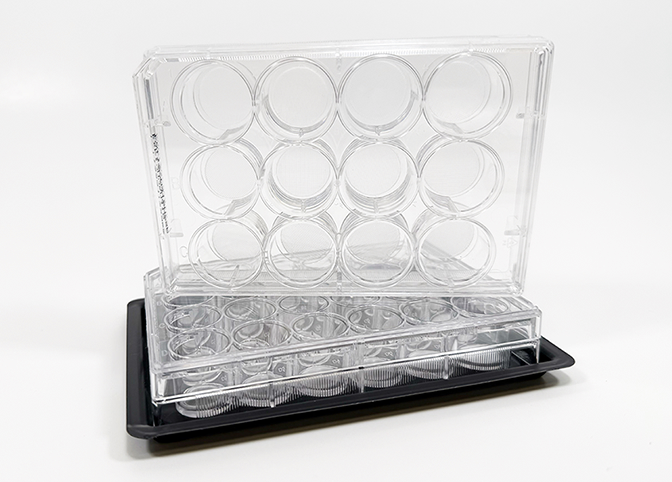
Scaffolds are designed to operate with standard well plates and other culture containers like petri dishes and chamber slides. They provide a solid and stable substrate for seeding, media exchange, staining, and imaging. No specialized equipment is required.
Why it matters: Enables advanced 3D culture without disrupting established lab protocols.
Applications & technical highlights
This Pattern Is Well-suited For:
Lattice scaffolds are highly versatile with applications in Tissue engineering of cartilage and anisotropic tissues such as muscle, tendon, nerve. They have also been proven in applications for biomanufacturing of spheroids and their handling across automated workflows.
- Tissue engineering for novel approach methodologies (NAMs)
- Biomanufacturing of spheroids
- Mechanobiology studies with a tunable cellular microenvironment
Manufacturing Method:
Melt Electrowriting (MEW)
Architecture:
Aligned primary fibers
Format:
Compatible with standard well plate configurations
Size:
Scaffold diameter: 13.0mm; Designed for 24 well plates. Other sizes are available upon request.
Use Case:
3D cell culture, tissue engineering, and biomanufacturing
Mechanism of action
This scaffold functions through architecture-driven physical cues that regulate cell organization and microtissue positioning in 3D culture.
Aligned fibers provide anisotropic topographical guidance, directing cell adhesion, elongation, and migration along a defined axis.
Secondary catching fibers introduce localized physical constraints that intercept and stabilize spheroids or microtissues during seeding and early culture.
Together, these features enable controlled cell alignment and reproducible microtissue placement while maintaining an open fiber network for media access and imaging. The scaffold’s deterministic fiber architecture, enabled by melt electrowriting, ensures consistent structural cues across experiments.
Configurable Formats
If this design does not meet your specific application, we can collaborate to design custom scaffolds. This is available for all of our scaffold geometries and can be designed to accommodate particular experimental constraints or culturing vessels, while maintaining our superb precision for world class reproducibility.
In addition to flat formats compatible with standard well plates, the scaffolds can be fabricated in non-planar geometries, including tubular configurations. These formats are suited for models that require curvature, a defined lumen, or circumferential cell organization.
Experimental Relevance:
Scaffold geometry can influence cell organization, nutrient transport, and mechanical boundary conditions. Access to multiple form factors allows researchers to select a geometry that better matches their biological model without changing the underlying fiber architecture.
Use Cases May Include:
Flat scaffolds for aligned 3D cell culture and imaging in well-plate formats
- Tubular geometries for lumenized, circumferential, or axis-guided tissue models
- Alternative dimensions or layouts to match specific culture systems or devices
Configuration availability may vary. Contact us at info@vivotex.com to discuss geometry options suitable for your experimental requirements or go here to learn more about our Custom Scaffold Solutions.
Material science overview
Manufactured via melt electrowriting, this scaffold features precisely placed, continuous microfibers with controlled diameter, spacing, and alignment. The resulting architecture provides highly precise and reproducible pore geometry and mechanical behavior. Our scalable manufacturing and quality control ensures consistent material properties and reproducibility across experiments.
Research Studies Using This Pattern
technical documentation
How to Use This Product
For detailed guidance on handling, seeding, and culture workflows, visit the Getting Started page in our Support Center.