
Hydrogel Reinforcement Scaffolds
Enhance the stability of soft hydrogel constructs to improve reproducibility, reduce sample loss, and enable easier handling while preserving the native biological environment.
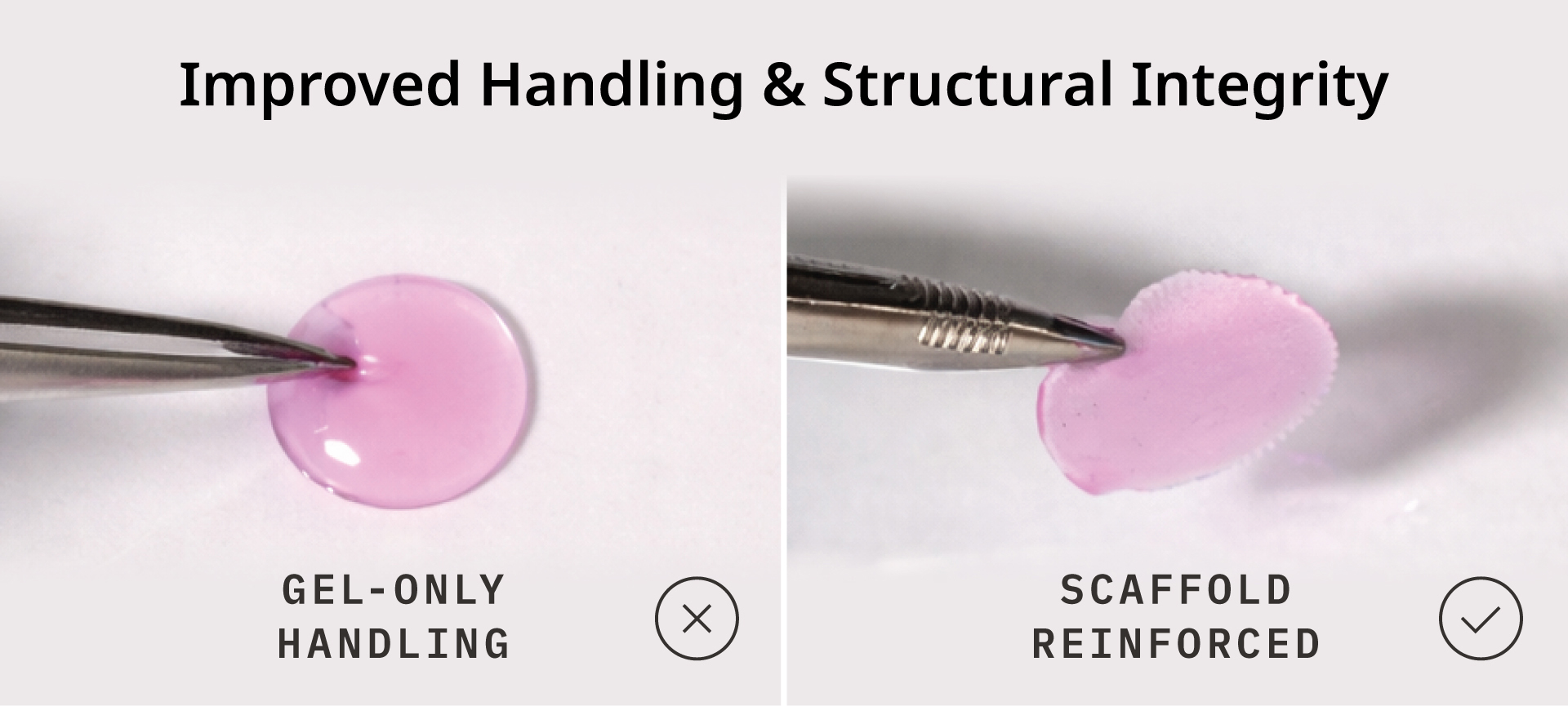
CHALLENGE
Soft extracellular matrices introduce variability into
experimental workflows:
- Poor reproducibility across experiments and between operators
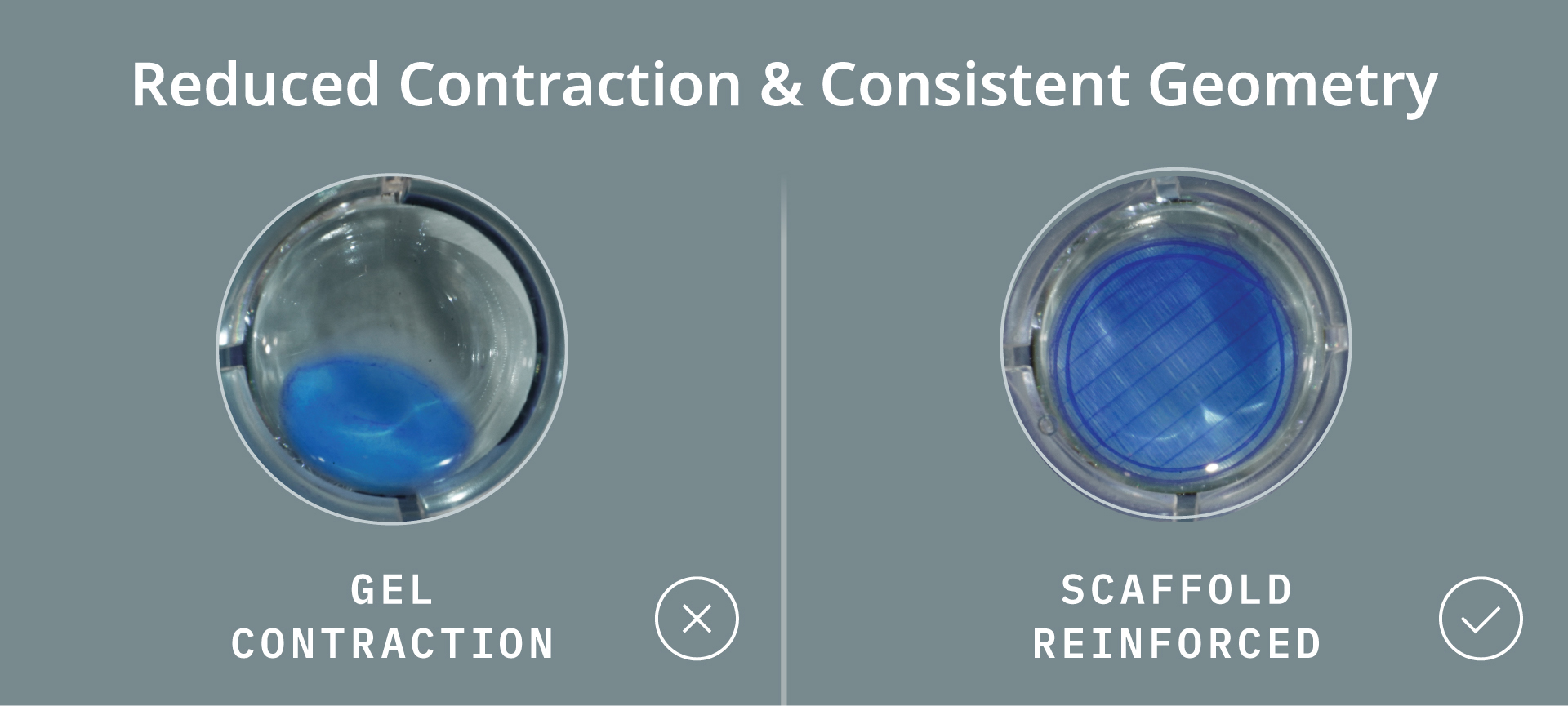
- Uncontrolled contraction over time
- Deformation, dislodging, and tearing during handling and pipetting
APPLICATIONS
- Organoid development
- Therapeutic efficacy testing
- Imaging and assay workflows
APPROACH
Integrates a micro-architectured scaffold within
hydrogel constructs to reinforce structure and
maintain consistent geometry during handling
and culture
FORMATS & PRICING
12-well plate: $350
24-well plate: $450
Volume Pricing Available
Improved Reproducibility
Consistent geometry reduces inter-user variability
Structural Stability
Reinforced constructs mitigate deformation
Easy Handling
Enables transfer and manipulation of delicate 3D cultures
Imaging Compatibility
Stabilizes samples for consistent imaging and improved optical clarity
Biological Compatibility
Preserves ECM conditions to support normal cellular behavior
Workflow Compatibility
Integrates seamlessly with standard 3D culture workflows
SUPPORTING RESEARCH
- 3D In Vitro Glioma-Neuron-Astrocyte Biomimetic Composites Recapitulate Key Molecular Mechanisms Linked to Glioblastoma Multiforme Pathophysiology
- Primary Glial Cell and Glioblastoma Morphology in Cocultures Depends on Scaffold Design and Hydrogel Composition
- Cortical Neurons form a Functional Neuronal Network in a 3D Printed Reinforced Matrix
- 3D Electrophysiological Measurements on Cells Embedded within Fiber-Reinforced Matrigel